Asbestos removal options
Asbestos popcorn ceiling removal
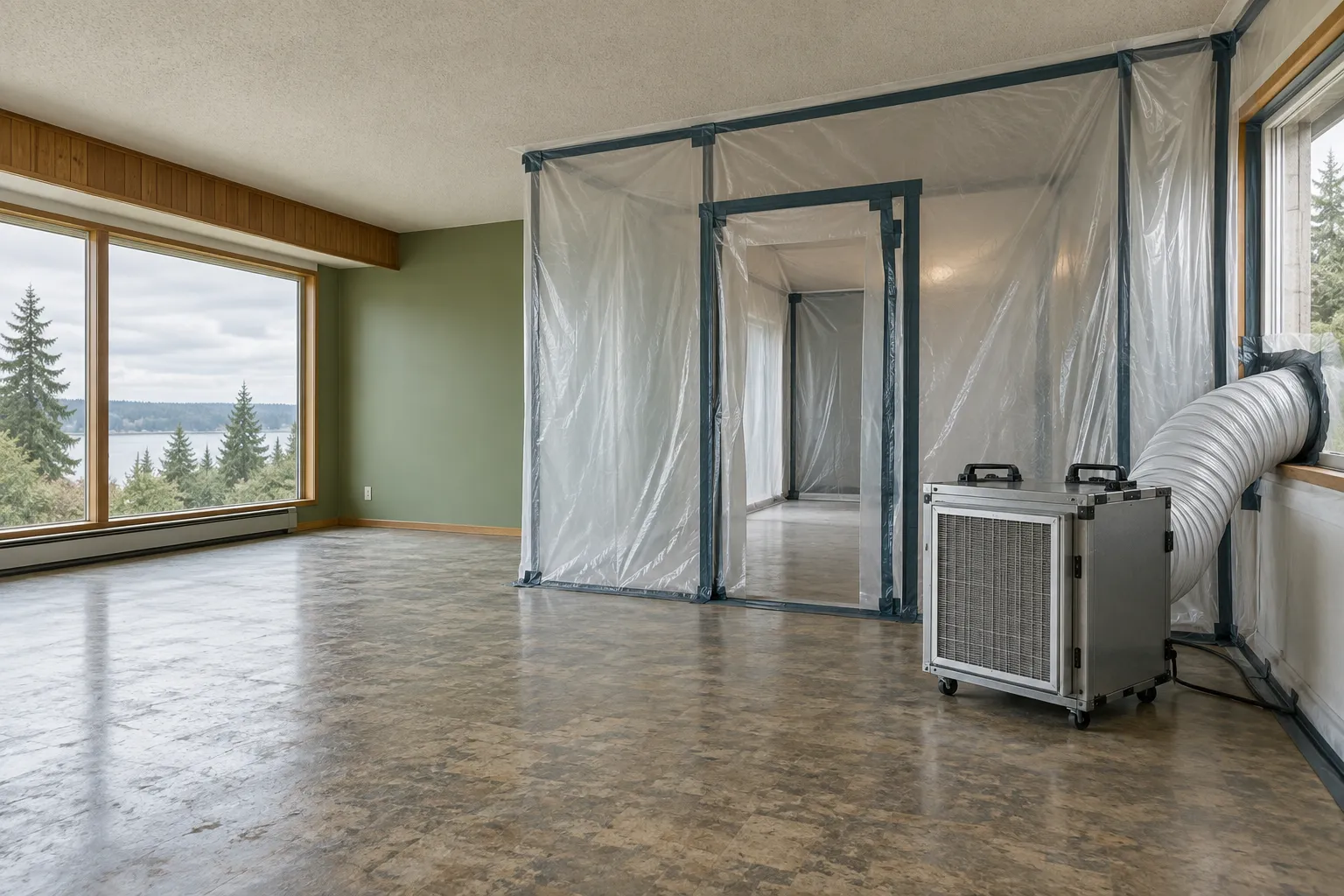
One ceiling can carry painted texture, a patched crack and a repair from an earlier remodel, and each may test differently. Appearance alone can't tell us whether stippled texture contains asbestos, so we sample every ceiling area your work will disturb, patches included. The lab results show which ceilings we scrape under plastic, and we take off only the texture that tests positive. Our price covers removal and cleanup; skim coating and paint for a smooth, ready ceiling come from your drywall finisher.
Asbestos floor tile and mastic removal
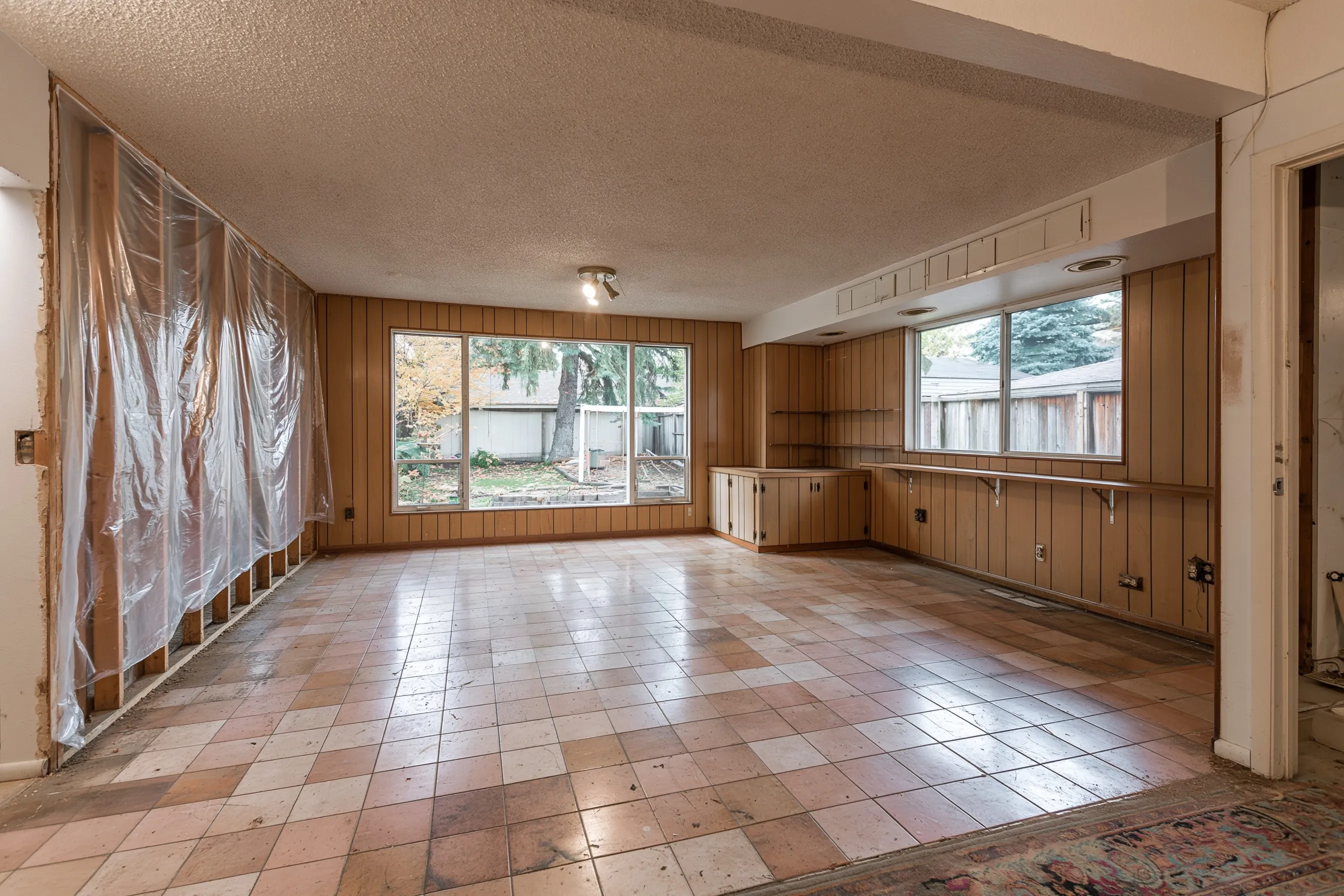
Kitchen and basement floors often have more than one layer: the tile you see, an older sheet floor or overlay under it, and black glue holding it down. Size and color don't tell you which layer contains asbestos, so we test each one and ask about old overlays or patch jobs you know of. In the rooms you are changing, we lift only the layers that come back positive. We also ask what new floor is going in, because its requirements decide how the subfloor is left.
Asbestos insulation removal
Heating-pipe wrap, a boiler jacket and attic fill each call for a different approach. Don't touch any of it until we've looked. Our survey notes where it is, what shape it is in and what your project will disturb, and we mark where our work starts and stops and which heating system it belongs to. When a plumber or heating contractor follows us, access and the heat shutoff matter most, so we sort both out with you before we schedule the work.
Asbestos siding and roofing removal
Before anyone cuts an opening or starts on new siding or a new roof, we test the old material, because you can't tell by looking whether cement siding or roofing contains asbestos. We go over which walls are involved, whether older layers hide under the current siding and whether windows, trim or a neighboring structure change where removal stops. We plan the removal together with the new siding or roof and work out how the wall stays dry once the old material is off.
Asbestos abatement before renovation and demolition
For a remodel, we survey just the rooms, surfaces and layers you are changing. For a tear-down, the survey takes in the whole building and anything else on the lot coming down, such as a shed or garage. With your plans in hand before demolition starts, we line up the lab results, any agency notice and the order of removal. Your remodeler or wrecking crew takes over once our part is finished. If the plans change, we update the survey to match. The lab report goes to everyone who will work in those rooms after us.
Commercial asbestos abatement
Commercial jobs have other people in the building, whether that is tenants next door or residents down the hall. In an apartment building we work with the manager to tell residents and arrange entry to units. In a tenant improvement or commercial demolition we check the shared corridors, air systems and delivery routes the work will affect, and schedule the survey and removal around them. Afterward we send the records to the owner, the tenants and the trades that follow.
Gather the demolition paperwork before booking the next trades
Tearing down a house in Covington takes more than an asbestos report. The city's demolition application asks for the asbestos survey, an abatement certificate and the notice details, plus site and utility information. Check the current checklist with Permit Services before you use an old copy of the form.
For a kitchen or bathroom remodel we test only the surfaces and layers the work will open up. That can reach past what you see: under cabinets, beneath an old floor, or where a new opening is cut. If the plan grows into a larger strip-out or a tear-down, we review the survey and paperwork against the new plan. We keep the asbestos records separate from the sewer, utility and site paperwork.
What we need to know first
Everything the work will touch
We need the whole job: the surfaces you plan to cut or pull out, the layers you expect to find underneath, and any shed, garage or other building on the lot. Bring any old reports and we check whether they covered the same work, because one test in one room only speaks for that material in that room. If the design changes, we need to hear before the work gets there.
Who does what, and when
Before the schedule is set, we mark out which materials come out, where the work area stops and how we keep it apart from rooms you are still using. We explain how we get in and out and what is off limits while we work. We also agree who files the notice, who takes the waste and who does the repairs, which matters most when several contractors each have their own contract.
The paperwork at the end
When we finish, you get the waste paperwork and the results of our visual check, plus any clearance air test the job called for. You also get a note of what asbestos, if any, stays in the building and what the next trade may disturb. Keep the paperwork with your house records so the next remodel starts from what was actually done.
Survey and project requirements in Washington
Before a house is torn down, Puget Sound Clean Air Agency may need a survey and a notice. The agency publishes separate guidance for remodels. Your building permit does not replace the asbestos survey.